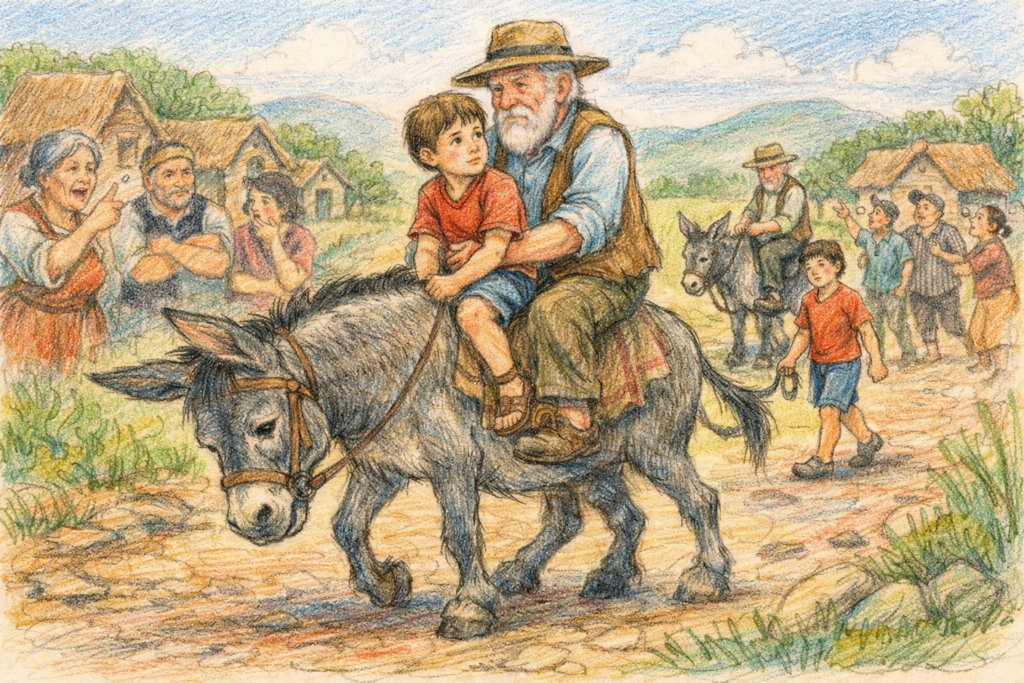
Once upon a time, a grandfather and his grandson decided to undertake a journey with a donkey. Initially, the old man had the boy ride the animal so he wouldn’t get tired. However, upon arriving at a village, the locals began to comment about and criticize the situation, that the old man had to walk while the boy, younger and more energetic, was riding. The criticism led the grandfather and grandson to switch positions, with the old man now riding the donkey and the boy walking beside it.
Yet, when passing through a second village, the locals were outraged that the poor boy was walking while the older man rode comfortably. Both then decided to ride the animal together. But upon reaching a third village, the villagers harshly criticized them, accusing them of overloading the poor donkey.
This little fable teaches two very important truths—one explicit and the other implicit. The explicit truth is that it is impossible to get everyone to agree with us. If we want everyone to approve of what we do, we will have to constantly change what we do or how we do it, because we will always find people who disagree with our actions, like what happened to the poor old man and his grandson, who changed their positions according to the criticisms made by the people in the villages they passed through.
The conclusion of this first lesson is that we should not act based on the opinions of others or seek their applause, because these opinions change like the weather. Trying to live according to the approval of others is pointless.
From this comes the second lesson of this fable, which, as I said, is implicit: we must act according to the criteria provided by absolute values such as truth, justice, and goodness. Truth is immutable and unchanging, and the same applies to other absolute values. It is precisely from these values that we must derive the criteria to discern what we ought to do.
If we act by discerning according to these absolute values, we will not worry about what others think, because we will discover that their thoughts stem from the criteria of their disordered passions, which are poor guides and often lead us to act wrongly and make mistakes.