The well-known writer José Luis Olaizola, winner of the Nadal Prize in 1982 for “La guerra del general Escobar” and author of numerous novels and children’s stories, recounts with his characteristic good humor how things went with the first novel he got published: “A nivel de presidencia.” He had sent it to several publishers—presumably with the hope of a first-time author—and they all sent it back. “Then,” he relates, “I remembered having read that the same thing had happened to great writers, and so, I decided that was a good sign.”
Thus, the rejections, instead of discouraging him, encouraged him to keep persisting to get his work published, in which he eventually succeeded. It’s very likely that if that thought hadn’t crossed his mind, the rejection from more than one publisher would have made him give up his literary career. However, thanks to that thought, he kept fighting until he found someone willing to publish it.
Why did he have that thought? The writer doesn’t say, but it’s easy to deduce that he had that thought because he had a firm desire to be a writer and to pursue a literary career. Therefore, his will sought every excuse to justify his persistence in the purpose, or direction, he had chosen for his life.
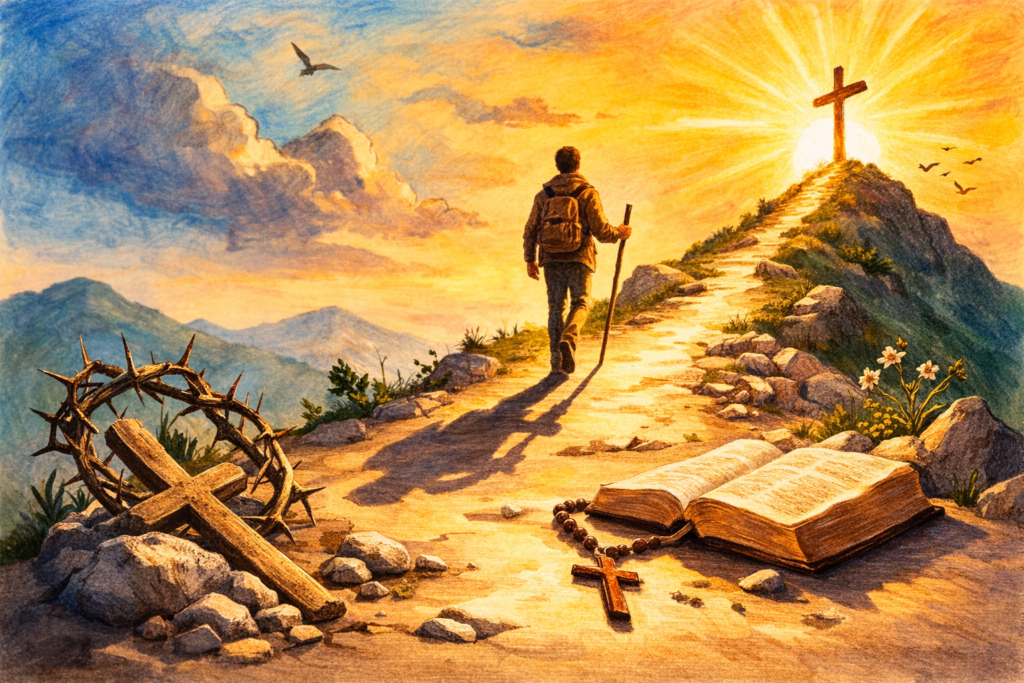
I think this is a good example for us, Christians, who pursue something much higher than a literary career: holiness. When difficulties come our way, and especially crosses, particularly those crosses where it seems that God has abandoned us, we must not let ourselves be carried away by the pessimism of those temptations. Instead, on the contrary, like the writer Olaizola, we must tell ourselves: all the saints have had crosses, and the crosses sanctified them, so it is a good sign that I am experiencing them.
This also means having a firm desire to be holy, as Olaizola had a firm desire to be a writer. The most difficult part of holiness is not the crosses that it entails, but the desire for holiness. As a wise saying goes: “It is not so difficult to be holy as it is to want to be holy.” Any sacrifice is worth it to achieve holiness. If we think that some sacrifice is too much, that God is asking too much of us, that these things are not worth suffering to attain holiness, it can mean two things: 1. that we have not yet understood what holiness is; 2. that we do not truly want holiness, that is, that we love ourselves and our comforts more than we love holiness and therefore more than we love God. In either case, the desire for holiness is nothing more than a whim with which we deceive ourselves.