
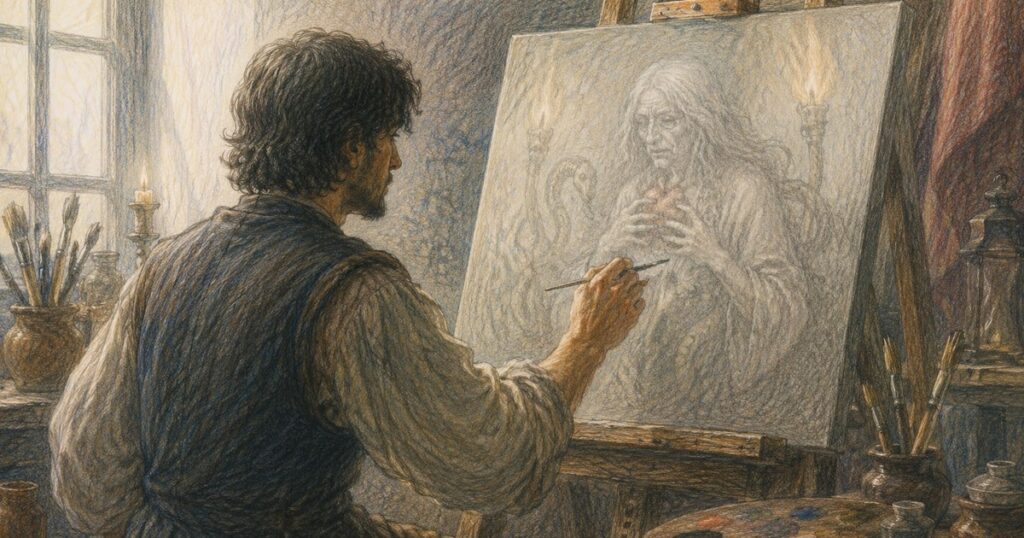
Once, a painter was asked to depict envy. After much thought and study on the subject, the painter portrayed envy in this way: an old woman, pale as death. In her claws she held burning torches and serpents, and with her black, decayed teeth she cruelly tore apart her own heart.
The person who had commissioned the work was satisfied with its quality, but did not understand it, so he began asking questions in order to grasp its meaning.
“Why have you made her a woman and not a man? Are men not as envious as women?”
“Yes,” replied the artist, “but after studying envy, I have discovered that it is a capital vice that primarily affects weak souls, and in art, weakness is represented as feminine. That is why I painted her as a woman—not because men do not experience envy.”
“Why have you made her old?”
“Because envy is as old as humanity itself, and it ages a person. Little by little, it kills charity within, as it directly opposes the love one should have for one’s neighbor. The prosperity of others, instead of causing joy—which is the effect of charity—provokes hatred.”
“Why have you made her pale?”
“Because sad people tend to be pale, and the chief characteristic of envy is sadness. The envious person is one who grieves over another’s good fortune and torments themselves when they see their neighbor prosper.”
“What do the claws mean?”
“The claws are the weapon an animal uses to tear apart its prey. They represent what the envious person seeks to do to the neighbor they envy: diminish their glory. The envious strive ruthlessly to destroy their neighbor’s reputation through slander.”
“And the torches and serpents?”
“They represent the fire and venom they wish to plant in the hearts of others against the envied neighbor. The envious person is not content merely to murmur against their neighbor in their own heart, but also seeks to fill others’ hearts with that same hatred, through defamation and calumny.”
“And why does she eat her own heart?”
“That is the most distinctive trait of envy: self-destruction. The envious person does so much harm to himself that he ends up destroying himself by that sadness which consumes him from within, embittering his entire life.”